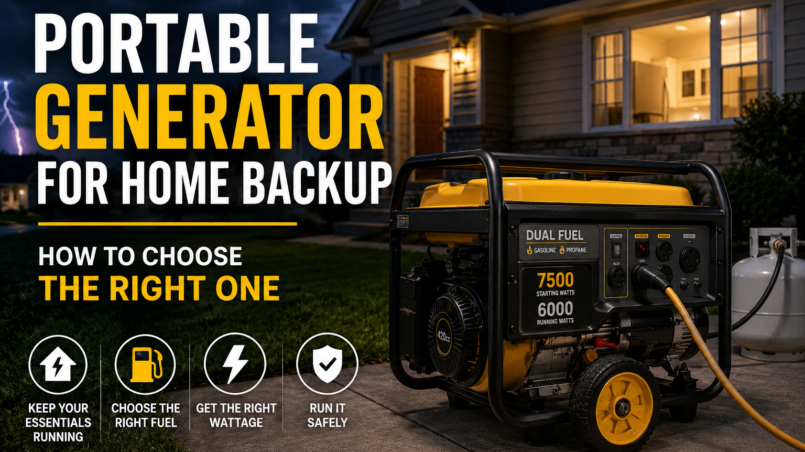
When a storm knocks out the grid, a portable generator for home backup is often the fastest, most affordable way to keep your lights on, your food cold, and your home comfortable. Unlike a permanently installed standby system, a portable unit costs less, requires no professional installation to get started, and can be moved wherever you need power. But choosing the right one means understanding how much power you actually need, which fuel type fits your situation, and how to run it safely.
This guide walks you through everything you need to know to pick a portable generator that will keep your essentials running the next time the power goes out.
Why Choose a Portable Generator for Home Backup?
Portable generators have become a go-to solution for emergency home power for several reasons:
- Lower upfront cost. A capable portable unit costs a fraction of a whole-home standby generator, which often runs into the thousands once installation is included.
- No permanent installation required. You can use a portable generator the day you bring it home using heavy-duty extension cords, then add a transfer switch later for whole-circuit power.
- Flexibility. Beyond outages, a portable generator can power tools at a job site, run equipment while camping or tailgating, or support an RV.
- Right-sized for essentials. Most households don’t need to power everything at once. A portable generator can comfortably run the critical loads that matter during an outage.
For homeowners who want reliable backup power without a major investment, a portable generator hits the sweet spot between cost and capability.
Portable vs. Standby Generators: What’s the Difference?
Before buying, it helps to understand how a portable generator compares to a permanently installed standby unit.
| Feature | Portable Generator | Standby Generator |
|---|---|---|
| Cost | Lower | Higher |
| Installation | DIY or simple transfer switch | Professional install required |
| Startup | Manual (or electric start button) | Automatic when power fails |
| Fuel | Gasoline, propane, or dual fuel | Natural gas or propane line |
| Capacity | Powers essentials | Can power the whole home |
| Portability | Yes | No (fixed location) |
A standby generator is the premium choice for hands-off, whole-home coverage. But for most people who simply want to ride out an outage, a portable generator for home backup delivers the power they need at a much friendlier price.
How Much Power Do You Need? Sizing Your Generator
Choosing the right size is the single most important decision. Buy too small and you won’t be able to run your essentials; buy too large and you’ll overpay and burn more fuel than necessary.
Generator output is measured in watts, and there are two numbers to watch:
- Running watts — the continuous power an appliance needs to operate.
- Starting (surge) watts — the brief spike of extra power some appliances, especially those with motors, require to start up.
To size your generator, add up the running watts of everything you want to power at the same time, then add the single largest starting-watt requirement on top of that total.
Approximate Wattage for Common Appliances
| Appliance | Running Watts | Starting Watts |
|---|---|---|
| Refrigerator/freezer | 600–800 | 1,200–2,200 |
| Sump pump | 800–1,050 | 1,300–3,000 |
| Furnace fan (gas) | 600–800 | 1,500–2,300 |
| Window air conditioner | 1,000–1,500 | 2,200–3,200 |
| Well pump | 1,000–2,000 | 2,000–4,000 |
| Microwave | 1,000 | 1,000 |
| Lights (several rooms) | 200–600 | 200–600 |
| TV and internet router | 150–400 | 150–400 |
Figures are approximate. Always check the nameplate on your specific appliances.
A common rule of thumb: a generator in the 3,500–5,000 running watt range covers the essentials for many homes (refrigerator, a few lights, a furnace fan, and small electronics). If you need to run a well pump, central elements, or air conditioning, you’ll likely want 7,000 watts or more.
Fuel Types for Portable Generators
The fuel a generator uses affects its run time, convenience, and storage requirements.
- Gasoline. The most common and widely available fuel. Gas generators are affordable but require you to store fuel safely, and gasoline degrades over time without a stabilizer.
- Propane. Burns cleaner, stores indefinitely in sealed tanks, and is easy to keep on hand. Propane delivers slightly less power per gallon than gasoline but is convenient for long-term storage.
- Dual fuel. These versatile units run on either gasoline or propane, letting you switch based on availability. A dual fuel generator is an excellent choice for emergency preparedness because it doesn’t lock you into a single fuel source.
Inverter vs. Conventional Generators
You’ll also choose between a conventional generator and an inverter model.
Inverter generators produce cleaner, more stable electricity (“clean power”) with low harmonic distortion, making them safe for sensitive electronics like laptops, phones, and modern appliances with circuit boards. They also tend to be quieter and more fuel-efficient because the engine adjusts its speed to the load.
Conventional generators run the engine at a constant speed and typically offer more raw power per dollar, which can make them a better value for high-wattage needs where electronics sensitivity is less of a concern.
For a portable generator for home backup that will run computers, TVs, and smart appliances, an inverter model is often worth the extra cost.
Key Features to Look For
When comparing models, prioritize these features:
- Electric start. A push-button or key start is far easier than a pull cord, especially in cold or stressful conditions.
- Transfer switch readiness. Look for a 120/240V outlet (often an L14-30 twist-lock) so you can connect to a transfer switch and power your home’s circuits directly.
- Built-in CO sensor. Many newer generators include a carbon monoxide shutoff that turns the unit off if dangerous CO levels are detected—a critical safety feature.
- Long run time. Check the run time at 50% load. A larger fuel tank means fewer refills during extended outages.
- Low noise output. Quieter operation (measured in decibels) keeps the peace with neighbors and within your household.
- Multiple outlets and USB ports. More outlets give you flexibility for different devices.
- Wheel kit and handles. A heavy generator is much easier to move with never-flat wheels and a folding handle.
How to Safely Connect a Portable Generator to Your Home
There are two safe ways to use a portable generator during an outage:
- Heavy-duty extension cords. The simplest method: run outdoor-rated cords from the generator directly to the appliances you want to power. This works well for a refrigerator, a few lamps, and electronics.
- A transfer switch or interlock kit. For whole-circuit power, a licensed electrician can install a manual transfer switch or an interlock kit at your electrical panel. This lets the generator safely power hardwired circuits like your furnace, well pump, and lighting.
Never “backfeed” your home by plugging a generator into a wall outlet. Backfeeding can send electricity back into the grid, creating a deadly hazard for utility workers and damaging your equipment. Always use a proper transfer switch or interlock for panel connections.
Generator Safety Tips
Portable generators are safe when used correctly, but carbon monoxide poisoning is a serious risk. Follow these rules every time:
- Run the generator outdoors only, at least 20 feet from your home, with the exhaust pointed away from doors, windows, and vents.
- Never run a generator in a garage, basement, shed, or any enclosed or partially enclosed space—even with the door open.
- Install battery-powered CO detectors inside your home.
- Let the engine cool before refueling to avoid igniting spilled fuel.
- Keep the generator dry. Operate it on a dry surface under an open, well-ventilated canopy if it’s raining, and never touch it with wet hands.
- Store fuel safely in approved containers, away from living spaces and ignition sources.
How to Maintain Your Portable Generator
A little maintenance ensures your generator starts when you need it most:
- Add fuel stabilizer to gasoline if it will sit for more than a month, or run the tank dry before storage.
- Change the oil according to the manufacturer’s schedule, and check the level before each use.
- Exercise the generator by running it for a few minutes every month or two to keep the engine and components in working order.
- Keep spare parts on hand, such as oil, spark plugs, and an air filter.
- Store it covered in a clean, dry place.
Frequently Asked Questions
What size portable generator do I need for home backup?
Most homes can cover essential loads—refrigerator, lights, furnace fan, and electronics—with a 3,500 to 5,000 running-watt generator. If you also want to run a well pump or air conditioning, look for 7,000 watts or more. Add up the running watts of your essentials, then add the largest starting-watt requirement to find your target size.
How long can a portable generator run continuously?
Run time depends on tank size and load. Many portable generators run 8 to 12 hours at 50% load on a single tank of gasoline. Propane and dual fuel models can run longer when connected to a large external tank. For multi-day outages, plan to refuel and let the unit cool between fills.
Can I connect a portable generator directly to my house?
Yes, but only through a properly installed manual transfer switch or interlock kit at your electrical panel, ideally installed by a licensed electrician. Never plug a generator into a wall outlet, as backfeeding is extremely dangerous.
Is an inverter generator better for home backup?
Inverter generators produce cleaner, more stable power that’s safer for sensitive electronics, and they tend to be quieter and more fuel-efficient. For powering computers, TVs, and modern appliances, an inverter model is a great choice. Conventional generators can offer more power per dollar when electronics sensitivity is less of a concern.
Is it safe to run a generator in the rain?
Never operate a generator in wet conditions without protection. Use a manufacturer-approved, open-sided generator cover or canopy that keeps the unit dry while allowing full ventilation, and keep it on a dry surface away from standing water.
Final Thoughts
A portable generator for home backup is one of the smartest investments you can make for peace of mind during power outages. By sizing your unit to your essential loads, choosing the right fuel type, prioritizing safety features like a CO shutoff, and connecting it through a proper transfer switch, you’ll have dependable backup power ready whenever the grid goes down.
Take the time to calculate your wattage needs and weigh inverter versus conventional models, and you’ll end up with a generator that keeps your household safe, comfortable, and powered through any storm.
